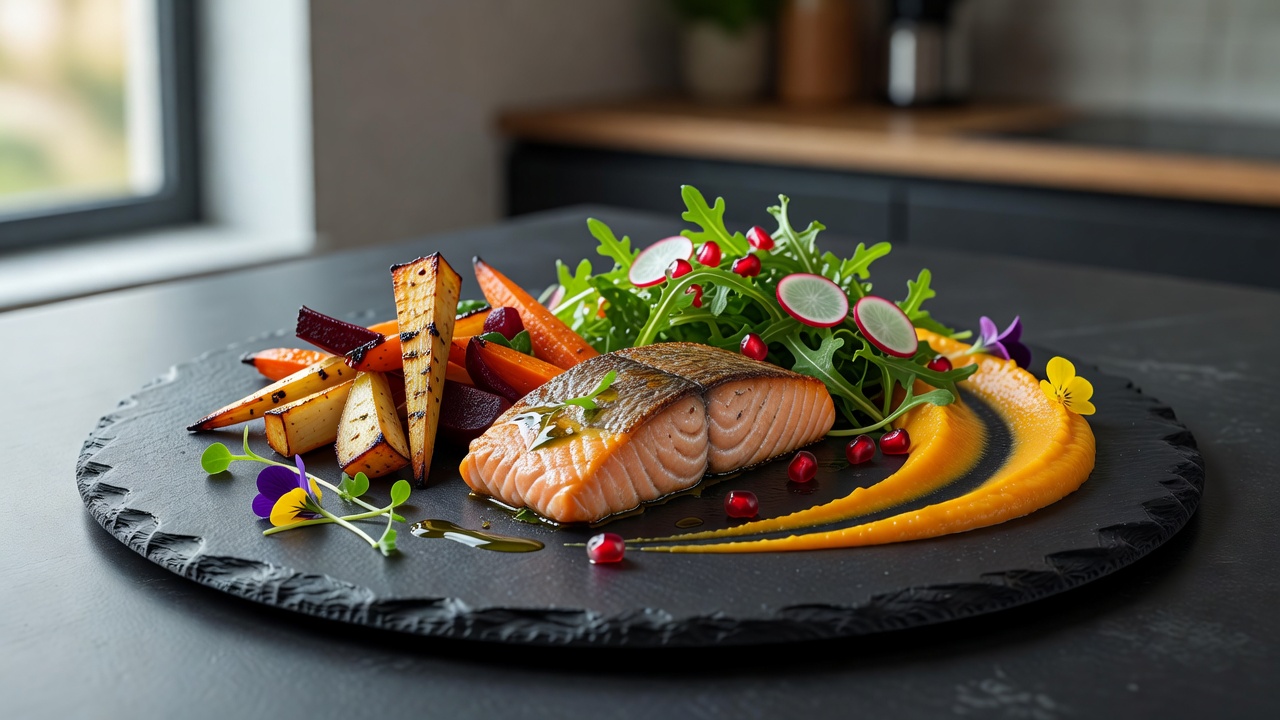
Ideas on the plate
There is no single Nordic cuisine.
The phrase “modern Nordic cuisine” describes a broad conversation rather than one uniform tradition. Denmark, Sweden, Norway, Finland and Iceland have different landscapes, languages and food histories. Coastal communities, forests, farms and cities each create different relationships with ingredients. Contemporary cooking may draw on local traditions, global exchange, careful technique or all three at once.
Seasonality is often a useful starting point. It asks what is available at a particular moment and how a kitchen responds. It does not mean every restaurant cooks in the same way, nor does it guarantee that every ingredient is locally grown. Travelers can look for menus that explain a dish’s inspiration with clarity rather than relying on vague claims of purity.
Seafood and the edge of the land
Long coastlines and island communities make seafood an important part of food culture across the region. Fish and shellfish appear in many forms, from everyday meals to carefully composed restaurant dishes. The species, preparation and cultural context vary with location. A coastal dining room may speak to a nearby sea, while an urban restaurant can interpret seafood through a wider contemporary lens.
Freshness is only one part of the story. Smoking, curing, drying and pickling connect seafood to preservation practices as well as flavor. Modern kitchens may use familiar methods in new combinations, but the basic idea of extending a season has deep practical roots. Ask how a restaurant frames its ingredients, and avoid assuming that every seafood dish is locally sourced.
Berries, roots and the brief season
Wild and cultivated berries bring acidity, fragrance and color to Nordic cooking. Their availability is seasonal, and regional conditions differ. Root vegetables are valued for their versatility and keeping qualities; they can anchor a meal, add sweetness or provide texture. Cabbage, onions and other durable produce also make sense in climates where fresh field crops are limited for parts of the year.
Modern restaurant presentation can make these ingredients feel unfamiliar, but the underlying flavors may be direct and recognizable. A berry might add sharpness to a savory plate; a root vegetable could be roasted, fermented or served raw. The point is not novelty for its own sake. It is to make an ingredient’s character legible.
Grains, rye and the pleasure of bread
Grains have a central place in everyday food traditions, with rye especially associated with baking in several Nordic contexts. Rye breads vary in texture, acidity and density; the category is not one recipe. Contemporary bakeries and restaurants may build a meal around bread, use grains as a substantial component or revisit familiar forms through different flours and fermentation schedules.
For a visitor, a bakery stop is a simple way to encounter a city’s daily food culture. Notice what people buy for breakfast or carry home, and how bread sits alongside coffee, cheese, fish or a midday meal. A neighborhood bakery can be as revealing as a carefully planned restaurant dinner.
Fermentation and preservation as living practice
Fermentation, curing, pickling and drying are techniques for changing flavor and extending the useful life of food. They are not exclusive to northern Europe, but they have particular relevance in food cultures shaped by seasonal variation. In contemporary kitchens, preserved ingredients can provide acidity, depth and contrast when fresh produce is less abundant.
These techniques need not be treated as a performance. Their interest lies in the relationship between time, ingredient and taste. A restaurant may use fermentation as one element within a broader menu, while a family tradition might preserve food for practical reasons. The same method can have different meanings in different settings.
Regional difference matters
Finland’s foodways should not be collapsed into a generic Scandinavian story; neither should Iceland’s island geography or Norway’s varied coast and interior be reduced to a single ingredient. Denmark’s agricultural landscape and cities offer a different frame again. Sweden’s regional diversity is similarly broad. Migration, trade and contemporary cultural exchange have also helped shape what people eat today.
When reading a menu, look for the balance between local references and wider influences. A thoughtful modern Nordic meal might feel rooted without being closed to the world. It can honor a regional ingredient, borrow a technique from elsewhere and still communicate a clear point of view.
What to look for
Notice how a dish handles texture, acidity and preservation. Is seasonality visible in the ingredient choices? Does the menu explain unfamiliar terms? Are traditional references presented as living practices rather than decorative shorthand? These questions help you appreciate the cooking without expecting a single definitive Nordic style.